Trust and Obey – is this song even biblical?

I have found from running this blog over many years that you can rave on about all sorts of things, you can have a laugh about people and places and churches and theology, you can even delve into a bit of politics here and there, if you dare. But the one thing that seems to be the most problematic is when you criticise music.

As soon as you say something about a popular ‘Christian’ song, or any song for that matter, the first reaction from a lot of people is, “How dare you! That is my favourite song / hymn because:

  • it’s the song my grandma sang to me when i was a toddler;
  • that is the song that converted me;
  • I want that song played at my funeral!

So with all that out of the way. Here goes!

We sometimes sing the lovely old hymn, “Trust and Obey” at our church. The best thing about it is the very catchy tune. I often can’t get the melody out of my head. But we are often encouraged to think about, and reflect on the words. I am not sure whether it is because of my own Christian background, or theology, or issues in life, but some of the lyrics either do not make sense to me, and do not fit in to what I would consider good theology. Now I am not a theologian (as do you think any serious theologian would write a blog called Christian Funny Pictures). But more than theology, it just doesn’t seem to fit with what I read about in the Bible. Here are a few very quick points, which I would love to hear from you whether you agree or disagree:

  • “While we do His good will, He abides with us still” – really? So God only abides with us while we do His good will. I hope not because we have all fallen short of his glory. What happened to ‘While we were still sinners, Christ died for us’?
  • “Not a doubt or a fear, not a sigh or a tear, Can abide while we trust and obey” – double really? Some doubts and fears and sighs and tears can result from doing exactly that, namely trusting and obeying. There will be no tears in heaven, but in this world, that is tainted and wracked with sin, it is full of all of these things.
  • Even the chorus is a bit of a problem: “Oh, Trust and obey, for there’s no other way, To be happy in Jesus, but to trust and obey”. Are we really aiming for being happy in Jesus? What about genuine Christians who have depression, or grief, or sadness, but are still living with Jesus as their Lord and Saviour? Still trusting and obeying!

I could keep going, but I had better stop before people turn away completely. I get the point of the song, that Jesus does call for our trust and obedience. But this song seems to be more influence by Stoicism, and lacks a bit of nuance as to what life is really like in this world.

But hey, that’s my two cents worth. What do you think? Is the song a load of piffle, or is this post a load of piffle?

Let me know with a comment below.

There is no rest for the wicked – meaning and origin

I have just had some time off work. And it has been wonderful. Not because I have done anything amazing or exciting, but just some rest. And whenever I have time off work my brain goes into hyperdrive, or more accurately attempts to process many of the things that I don’t normally have time to think about and process when I am working.

And during part of my time off I spent some time considering the phrase “There is no rest for the wicked”. I knew it was a Bible quote, but it seems that it has come to mean a whole range of things in different contexts, including a song of a very similar name (Ain’t no rest for the wicked, by the Cage Elephant).

The quote originally comes from a book in the Bible called Isaiah, in chapters 48 and 57, where it doesn’t actually have the quote exactly, but pretty close. It appears to be talking more about how there will be no peace for those who do evil, and that the wicked are like the tossing sea, which cannot rest. Hence, the phrase that there is no rest for the wicked.

The difference between the idea of peace and rest is important. Peace with God, which is possibly the greatest gift of all, must include rest, but must be more than just rest. But the phrase is used in many other ways these days.

One way in which it gets used, is in this picture. We originally posted this in 2017 and it has now been shared over eleven thousand times:

But the phrase has now been used, or it appears that it is currently being used in the following circumstances:

  • in the idea that evil doers will ultimately face punishment and miss out on rest / peace (the original biblical meaning);
  • as an excuse to do something, or about something having been done that couldn’t be helped;
  • to somehow encourage children to behave;
  • as a result of laziness or fault or a problem a person will need to catch up on work and miss out on rest;
  • to comment on a person’s work ethic, and how they are always busy with work to be done.

It is interesting that the last usage, is one that is used by Christians and non-christians alike, as if somehow being busy is a goal in itself.

There is a very common assumption these days that if you are not busy, then you should get doing something. Being busy equates to being important, being worthy, or even worse, of having value. I don’t really want to comment that only one usage is the right usage. However it is interesting that both the ‘being busy is good’ usage, and the ‘doing wicked but fun things is good’ usage are not really the way in which God used it.

Regardless of all this, I enjoyed my rest, and I am looking forward to my ultimate rest?

What about you? What do you think the ultimate rest will be like? Will we still be busy? What will we be doing? Is it ok to have rest now?

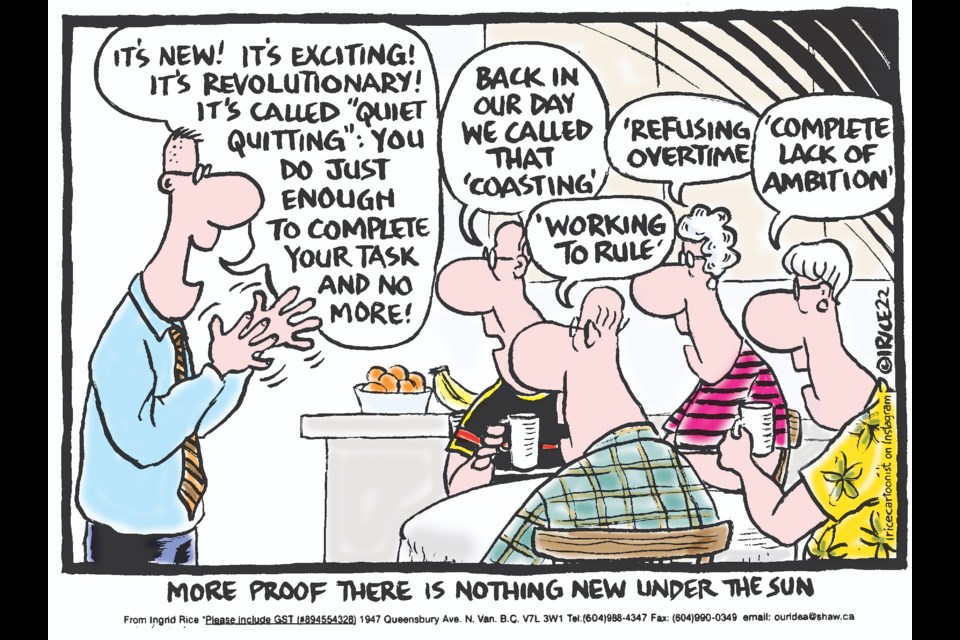
Is ‘quiet quitting’ a Christian thing to do?

You may or may not have heard about the idea of ‘quiet quitting’?

Depending on where you get your information, or what sources you trust, it appears to be either a very good thing or a very bad thing.

The proponents of ‘quiet quitting’ say that it is simply doing the tasks involved with your assigned role at work, no more, no less, and doing your job without your job taking over your entire life.

Another positive way of looking at it, is saying ‘no’ to extra work at work without extra compensation, which is hard to argue with, as it is doing the job you were initially hired to do at the pay you agreed to do it for. Jesus in fact told a story about this idea in the parable of the workers in the vineyard (Matthew 20:1-16), although the point of that story was more about the overwhelming generosity of God in our salvation, as opposed to appropriate workplace relations.

There are then those who appear much more critical of the idea of ‘quiet quitting’ as it is more a step towards quitting on life, and people giving up on any ambition in life to go above and beyond to achieve success.

So how should Christians approach the topic? What is a biblical viewpoint?

Well this is probably much too complicated to deal with on a blog post on a website called Christian Funny Pictures, but here are a few thoughts:

  • Christians are called to work and rest, not just because both of these things are good for us, but so that we can look after ourselves, and our families, and to be generous with what is left over;
  • Christians are supposed to put our work in a proper perspective, both doing a good job, but also having an eternal perspective;
  • We will not be much use to anyone, our family, our society, or our church if we are so exhausted from work we have no energy for anything other than work, or even worse, if because of our work, we burn out completely;
  • It is probably not a great idea to ‘quiet quit’ on church (see a fantastic article by Russell Moore in Christianity today);
  • If we are in full time paid ministry, it is probably not a great idea to quiet quit, and only do the bare minimum;
  • If we are not in full time paid ministry, it is probably not a great idea of saying no to extra work without extra compensation. As a church volunteer myself, if I only did what I was paid to do at church, I wouldn’t be doing anything, and I like doing stuff at church (not always, but generally).
  • It is good to call out bad bosses, companies that exploit their workers, and people who do not treat others fairly;

On reflection of this idea of ‘quiet quitting’ I am not sure it is a completely new idea either. I have often heard the idea of Christians who ‘moonlight’ in their paid employment, so that they can devote themselves to other ministries. In fact, Saint Paul, perhaps one of the greatest missionaries and preachers of all time, was also an itinerant worker. He was also perhaps the first person to ‘quiet quit’ in his tent making employment. Of course, Saint Paul had his own reasons for tent making, but would anyone say to Saint Paul, “It’s a shame Saul of Tarsus, didn’t go above and beyond in his tent making skills, as he could have used his ambition to become the best tent maker in all of Asia Minor”.

What do you think? Have you heard of ‘quiet quitting’? Do you lean towards it being a good idea or not a good idea? Should Christians engage in the practice?

We would love to hear your thoughts on the topic, if you have any.

Pity prayers and what to do about them

I have been greatly blessed by the ministry of Paul Tripp over the years. His faithfulness in preaching and writing has helped thousands all over the globe, including me.

One of the themes of his ministry is connecting the transforming power of Jesus Christ to everyday life. He also seems to help people find their own need for Jesus Christ rather than focussing on the way in which other people need to change.

An article he wrote called “In need of prayer“, includes the following:

“Lord, I‘m a person in desperate need of help today.”

“Lord, won’t you, in your grace, send your helpers my way?”

“Lord, please give me the humility to receive the help when it comes.”

Which leads to me to my reflection for today …

Have you ever experience ‘pity prayers’? And what do you do when you receive them, either actual pity prayers, or other people’s prayers that feel like pity.

Now, don’t get me wrong. I love people praying for me. As the prayer above suggests, I am a person in desperate need of it. Of prayer, and help, and helpers. And I am sadly quite often not humble enough to receive it.

But I have also experienced pity. I have felt it, and experienced it. Pity is different from compassion, or empathy or genuine prayer. It is often accompanied by judgment or self-righteousness, in that another person is praying for you and your situation, but doing so from an elevated position.

“How did you ever get yourself in this mess?”

“I am so glad I am not like this desperate sinner in need of grace”

“I will pray for you to sort out your own situation”

This could be similar to the Pharisee’s prayer in Luke 18:11. But I know this type of prayer, because I have received it, and sadly, I have given it. Neither feels real or genuine or pleasant. I am trying to resolve this issue in my own heart at the moment. Perhaps you have some ideas.

Have you ever been on the receiving end of pity? Or even worse, pity prayers?

How do you cope? What is the right response?

Should Christians enjoy Black Friday?

Another controversial holiday for Christians? Or is it?

There are many good things and not so good things about Black Friday. For who doesn’t like a good bargain … even Christians.

There are however some good reasons that some Christians have expressed concern about the holiday including:

  • we automatically forget about Thanksgiving;
  • we can be tempted to greed or storing up things for ourselves;
  • we can be distracted from the beginning of Christmas celebrations;
  • we may be sending a bad message to those less fortunate than ourselves

You can read a much better explanation of the concerns about Black Friday here, in an article by Megan Bailey, at beliefnet.com. One concern we have about too much debate about Black Friday is that it is very easy for our hearts to slip in to judging others, for what they did or didn’t buy. It is another great example for which Proverbs 4:23 is relevant.

So should you enjoy Black Friday or avoid it? We are sorry to disappoint you but if you came to a site called Christian Funny Pictures expecting to find well grounded Biblical advice on some of life’s big or not so big issues, then you may be looking in the wrong place. Paul Tripp, Pastor and author has a good article about “The Original Black Friday“, which may help in that department (pardon the pun). We are going to stick with what we do best, so here are 11 Christian Funny Pictures about Black Friday.

Please share and enjoy!

Should Christians say “Let’s go Brandon”?

We are not here to tell Christians or non-Christians what to do. We are nothing more than a website that posts funny pictures and cartoons and articles to help and encourage people to laugh AS Christians, not AT Christians. We have been doing that for nearly 10 years. Lots of people like it. Lots of people have been encouraged by it. So if you have come here to debate and argue, then you are probably on the wrong site.

However, we accept the reality of the world. This fallen world. As a result of the popularity of this page, and our Facebook page, we had to come up with a policy about commenting. You can read about it here.

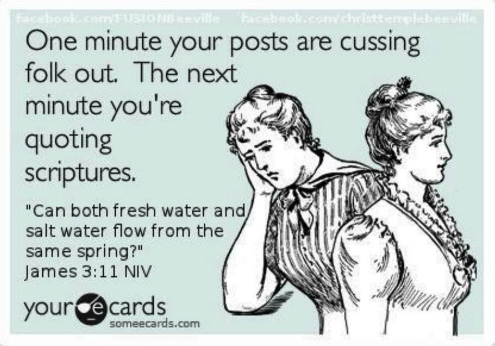
Sadly, one of the first things we had to have was a policy on swearing. That’s right. Swearing on a page called “Christian Funny Pictures”. Along with offensive comments, personal attacks and spam.

Why?

Because we ourselves were the victim, and still are, of regular messages swearing at us, attacking us personally, and telling us to shut down the page or to go to hell. By Christians, or people claiming to be Christians (and others of course, but the attacks by Christians is discouraging to say the least).

So we come to the topic of “Let’s go Brandon” with a little bit of our own history.

But as we said above, we are not here to tell people what to do. But we have thought long and hard about cussing, cursing, swear words, toilet humour, potty mouths, expletives, and dirty language.

So what to say or do about “Let’s go Brandon”. We are not American, so it is always tricky commenting on the local politics of another country or state. But here goes. Here is a post which has a list of Bible verses about cussing:

I have heard from many that the phrase “Let’s go Brandon” is fine because each of the three words have nothing to do with cussing or swearing. What about your heart? What are you really saying?

Christians should not involve themselves with profane chants, or even the innuendo around profane chants. We have the Word of God. We have the Holy Spirit who can help us with our words even when we don’t know what to say. Why stoop to juvenile language just to join in the crowd?

Are you angry about politics? Then do something about it. But hold on to your principles. If you are a Christian you have been set apart by God for something greater.

Are you disappointed by the state of affairs in America or anything other country around the world? Pray about it. Think about your own actions, and ways in which you can improve your local community, state or country. Use you words for something other than crude slogans.

Will some people disagree with this post? Sure, why not. We would love to hear from you, but if you swear and carry on you will prove one of the points that we are making.

[If this was all a bit to heavy for you, here are some lighter, but clever pictures on the topic]

Finding Cleo Smith: the cause of great rejoicing

You may or may not have heard the story of little Cleo Smith. She was a 4-year-old West Australian girl who was taken out of her tent while camping with her family. She was missing for 18 days. 

This morning, the Western Australia Police entered a house in a small town about an hour away from where she had been camping with her family, and found her. She was alone, locked in the house, in one of the rooms. Apparently, there is footage from one of the body worn cameras on the police officer who found her, and at the moment she was discovered, she simply stated “My name is Cleo”.

She is four years old. Taken, or perhaps a more appropriate word, abducted. These stories very rarely have a happy ending. The nation of Australia has been brought to tears, starting with the Commissioner of Police. Imagine a hardened police officer of close to 40 years’ service. Has risen to the top of his police force. Imagine the things he has seen and dealt with over this time. He said “Having been around the block a bit, we obviously were very, very concerned [after] so many days passed”. And here he is, brought to tears by the finding of little Cleo Smith.

And while we are imagining: imagine what it has been like for the parents of little Cleo over the last 18 days. Imagine their pain, their anguish, over the uncertainty of where Cleo is, of whether she is alive, and what is happening to her, or being done to her after being taken. Imagine the pain of facing allegations that they were somehow involved in her disappearance.

But after all of this, imagine the joy that this must have brought for them. Cleo’s mother, Ellie Smith, said this morning that her family was now whole again. 

We may not even be able to imagine what it is like for that family, and perhaps we have only an inkling of what it is like. One of my nephews was ‘lost’ at Disneyland for 9 minutes and the pain of that 9 minutes still haunts my brother in law.

While no analogy is perfect, the Bible talks quite a bit about the joy of finding lost things. Luke Chapter 15 talks about the rejoicing in heaven when a lost sheep is found, and the woman who was rejoicing after a lost coin was found. And perhaps the most well-known story from the Bible is the great celebration that followed after the ‘lost son’ returned to his father: “[he] was dead and is alive again, he was lost and is found”.

However, this ‘lost son’, chose on his own to take his father’s inheritance, chose to leave his father, and chose to squander the wealth. He only returned when he hit rock bottom.

Little Cleo made no choices. She was taken from her family, without any wealth or possessions, from everything she knew as her security, and only returned, when she was miraculously found by police. She was innocent.

But some of you may also know about the father who had his innocent child taken away from him. About his son who endured a torture beyond anything one could imagine for three days. A father who knows the pain of loss but also the great joy of a child who returned.

Like all of us here on earth, the angels must be rejoicing in heaven tonight about little Cleo Smith being returned alive and well, just like God does whenever one of his little children turns back to him.

Praise God for little Cleo’s return!

And because this post has been a bit more serious than our usual ones, here is a link to some great cartoons and pictures about the parable of the lost son, the lost sheep and the lost coin. Enjoy!

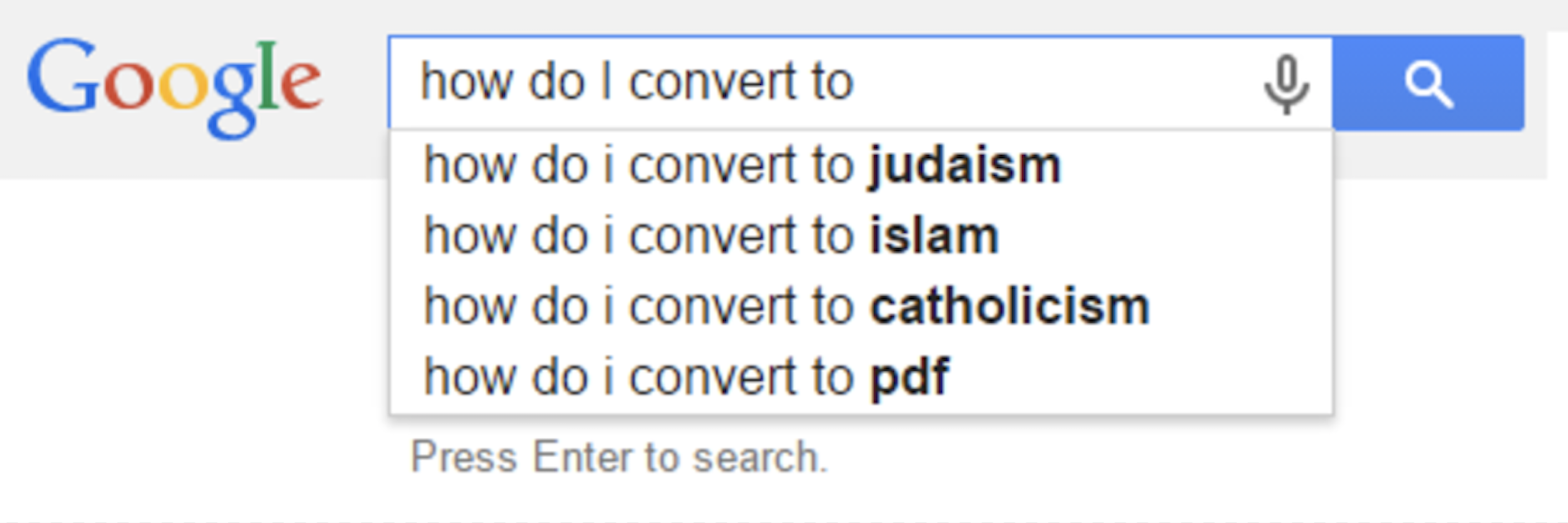
How do I convert to …

This picture has been around for a while, and is often entitled “PDF becomes 4th most popular religion”. This is both clever and funny, but also interesting. Google runs a search engine and it is well known that the same search can have different results based on your location, your search history, the time of the day etc etc.

For example, I ran the same search today from my part of the world, Sydney Australia and this is my google search result for “how do i convert to …”

I quite like my results in that I like not only ‘pdf’ but also ‘pdf meme’. However it is interesting given my computer and internet search history is full of Christian stuff, including lots of Christian Funny Pictures, that ‘islam’ and ‘muslim’ comes above ‘Christianity’ and ‘Orthodox Christianity”. Perhaps I am also a cheapskate given I have a result of converting to ‘pdf for free’.

What do you think?

And now before this post gets to serious, here is another Christian Funny Picture.

Should Christians fear the Coronavirus?

The Corona virus – a danger to your health, and a risk to your wealth, but as Christians, should we fear it? Should we be worried about it? I am not sure whether fear or worry is the right word, but my answer is generally yes and yes and here’s why: it will reveal your heart.

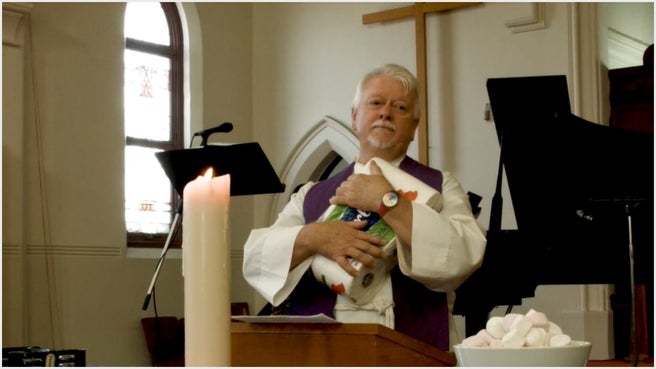
Whether you like it or not, the Coronavirus will not reveal your strengths, but will almost certainly expose your weaknesses. It will test you and challenge you and if you are willing to listen, show you where you have put your hope. Here are three common reactions to what is going on at the moment, in the context of toilet paper of all things, but hopefully you will see how it can apply to almost any area of our lives.

Fear or panic

Corona virus is coming. We only have a week of toilet paper left. I’m scared we might run out. What should we do? How will we survive without it? Everybody else seems to have enough. I just saw a picture of an empty shelf at the supermarket. I had better drop everything and rush to the supermarket.

Greed or Hoarding

Thank God I got here early. There are still four packets of toilet paper left. I had better buy all four, just in case. Perhaps if there really is a shortage I could start selling them one roll at a time. I might make a tidy profit.

Judgement or Sneering

Look at all those stupid people who think that toilet paper is running out. I trust in God and I know he will always provide. I pray three times a day, give us today our daily toilet paper. Thank you, God, that I am not like other people— hoarders, sinners, and degenerates.

A theology of toilet paper

A couple of months ago I could not have imagined I would have been discussing the theology of toilet paper, but you are reading this on a website called ‘Christian Funny Pictures”. And as you can see, even toilet paper (or the lack of it) can reveal our heart. If I were to take a guess, it is the last category that most Christians fit into. We laugh and scoff and mock and sneer at the real, if not irrational, concerns of those around us, (although perhaps some of us also suffer from the first two but live in such fear of the third that we can never talk about it).

Which leads me to this fantastic analogy I read a few years ago. It had such a big impact on me that I have never forgotten it:

You are holding a cup of coffee and someone comes along and bumps into you or shakes your arm, making you spill your coffee everywhere Why did you spill the coffee? “Well, because someone shook me, of course!” While that would be the initial response for most of us, it’s the wrong answer.

You spilled the coffee because coffee was in the cup. If tea had been in it, you would have spilled tea. Whatever was inside the cup is what will come out.

Therefore, when life comes along and shakes you (which will happen whether through Coronavirus, or toilet paper shortages) whatever is inside of your heart will come out. It’s easy to fake it until you get rattled. So we have to ask ourselves, “What’s in my cup?” When life gets tough, what spills over? Love, joy, peace, patience, kindness? Or fear, panic, greed, and judgment.

And let’s be clear, we will definitely get shaken.

So remember to examine your heart and perhaps reflect on Proverbs 4:23: 

“Above all else, guard your heart, for everything you do flows from it.”

I always remember a comment my seven year old said when I was discussing this verse with her, and she asked, “Dad, are we guarding our heart to keep the bad things from coming in or to keep the bad things from going out?”

No matter what is spilling out of your heart at the moment, or how much toilet paper you have hoarded to wipe it up with, it might be worth taking a moment and asking yourself, ‘What’s in my cup today?’.